Table of Contents
- 1What Is Moderate Drinking?
- 2I Am Just a Social Drinker. Should I Be Worried?
- 3Why Should I Not Drink Alcohol?
- 4What Are the Health Effects of Alcohol?
- 5How Does Alcohol Affect Heart Health?
- 6What Do the Researchers Say About Alcoholism?
- 7If Alcohol Is Unhealthy, Why Is It Being Sold?
- 8What Measures Can Be Taken to Prevent or Reduce Alcoholism?
- 9What Amounts of Alcohol Are Safe?
Overview:
No amount of alcohol is safe, and we mean it! The “World Heart Federation,” in its latest health report, breaks open the truth on a widely prevalent impression towards alcohol, that drinking moderate amounts of alcohol is good for health and decreases the risk of heart disease. If you, too, were one among those who believed the same, you have come across the right piece of information. We urge you to stop drinking right now!
What Is Moderate Drinking?
According to some studies, less than one drink per day is considered moderate, and others say three to four drinks a day is moderate. Based on the United States’ levels, one drink is 12 ounces of beer, five ounces of wine, 1.5 ounces of hard liquor, and delivers approximately 12 to 14 grams of alcohol. There is no superior alcoholic beverage that turns out to be heart-healthy, including red wine. So the choice of alcoholic beverage has little to no effect on cardiovascular health.
I Am Just a Social Drinker. Should I Be Worried?
May it be for fashion, trend, adventure, chilling, relaxing, socialization, or anything else, if you drink, you definitely need to start worrying about yourself. Drinking alcohol for any purpose, any frequency, or any amount is never supported by healthcare professionals worldwide. It is a big “NO.” Alcoholism is like the tip of the iceberg submerged in the ocean. It might seem like a small issue and easy-to-handle thing, but gradually alcohol becomes an unavoidable habit costing you your life.
Why Should I Not Drink Alcohol?
If you ask us the above question, we have a question in return, “why should you drink alcohol?” Facts reveal 2.5 million deaths in 2019 that account for nearly 12.6 % of deaths in males and 4.3 % of all deaths worldwide. And the cause is “alcohol.”
Alcoholic beverages contain ethanol as the active ingredient, which is a central nervous system stimulant initially and depressant eventually. It is psychoactive (affects the mind or behavior) and a toxic substance that causes dependence. The behavior, mental state, thought processes, mood, cognition, consciousness, and perceptions of a person are all altered and affected by alcohol.
Although they could not ban it, countries like Australia, the Netherlands, and England have lowered their recommended amount of alcohol for low-risk drinking for their people to prevent cardiovascular diseases. A decade of research has led them to make such decisions.
What Are the Health Effects of Alcohol?
Alcoholism, whether in moderation or not, is known to increase the risk of the following diseases and conditions;
-
Cardiovascular diseases.
-
Coronary disease.
-
Stroke.
-
Hypertensive heart disease.
-
Atrial fibrillation.
-
Aneurysm.
-
Obesity.
-
Digestive diseases.
-
Liver inflammation (hepatitis).
-
Liver cirrhosis.
-
Pancreatitis.
-
Preterm labor.
-
Mood and anxiety disorders.
-
Sleep disruption.
Apart from the above health conditions, it also;
-
Causes road traffic accidents due to drinking and driving.
-
Causes relationship issues/abuses.
-
Contributes to violence and criminal activities.
How Does Alcohol Affect Heart Health?
Overdrinking is definitely bad for your heart. But lately, drinking within limits also proves unhealthy. Alcohol increases blood pressure by triggering hormones that constrict the blood vessels and results in angina, heart failure, hypertension, stroke, etc. It increases the heart rate, blood pressure and causes irregular heartbeats and weakened heart muscles.
Alcohol-induced increase in HDL (high-density lipoproteins) levels was the factor that led everyone to believe alcohol to be cardioprotective. But now, the cardioprotective effects of HDL itself are uncertain because studies show that the effects of HDL in preventing myocardial infarction are nil.
What Do the Researchers Say About Alcoholism?
According to the World Health Organization (WHO), alcohol is considered to be the leading factor causing premature mortality and disability among the 15 years to 49 years of age. 10% of the population die in this age group due to the consumption of alcohol.
Recently, the World Heart Federation came up with their research report on alcohol’s effect on heart health, and the revelations were shocking. It quoted, “any level of alcohol consumption can lead to loss of a healthy life.” Arguments about the merits and demerits of alcohol have always been there and still are present. Until now, the facts supporting moderate drinking is good to health have kept the drinkers at peace, but this recent research report has broken all the previously mentioned good effects of moderate alcoholism.
If Alcohol Is Unhealthy, Why Is It Being Sold?
Alcohol in excessive amounts is unhealthy, and everyone knows it. But only fewer people know that alcohol in moderation is also unhealthy. It is a proven fact that the people and alcohol industry deny agreeing. Misleading short-term scientific studies without proper evidence, lack of universal advice, the influence of alcohol industries on the press, media, public etc.
The Government (to some extent) has been promoting the myth that “alcohol within limits is good for health” for their own financial benefits. The lack of stringent laws has made alcohol easily accessible to the public, and its intoxicant and dependence-producing properties keep the people addicted to it.
Some Harsh Truths Associated With Alcohol:
-
People of low socioeconomic groups who have problems managing their daily expenses more prevalently use alcohol and encounter its deadly health and social effects than people of high socioeconomic groups.
-
Lower and middle-income countries report higher deaths due to alcohol than high-income countries.
-
Alcoholism weakens the immune system and elevates the risk of communicable and infectious diseases like pneumonia and tuberculosis.
-
Present alcoholism leads to future nutritional deficiencies and osteoporosis.
-
Contrary to how it is being marketed, red wine has the same deleterious effect on your heart as any other alcoholic beverage. Previously claimed health benefits of red wine are not proven and studies claiming the same is inconsistent and non-randomized.
-
Studies concluding alcoholic beverages healthy do not consider certain personal histories like the heart-healthy diet, physical fitness levels, genetics, etc., that contributes to heart health.
-
Most studies that show the positive effects of alcohol on health are funded by alcoholic beverage industries.
What Measures Can Be Taken to Prevent or Reduce Alcoholism?
1. Every Government can advocate WHO’s SAFER guidelines which are;
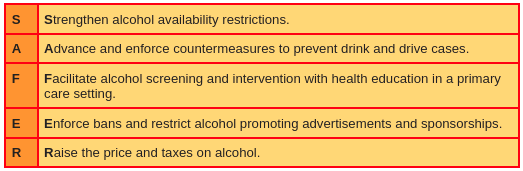
2. The legal drinking age and drinking limits can be fixed by the authorities, and laws should be stringent.
3. Health warning quotes on the product labels must be made mandatory.
4. National and international campaigns to raise awareness of alcohol and its detrimental effects must be conducted from time to time.
What Amounts of Alcohol Are Safe?
There are no safe, standard, or healthy levels of alcohol, and neither are there any gender or age group exclusions. Whether men or women, young or old, with or without comorbidities, everyone should stop alcohol and make this universe a better place. If you have not yet taken a sip of alcohol, it is better not to start in the first place. “Abstinence” is the motto.
