A Patient's Guide to Recurrent Wound Infections

Verified data
16

1 min read

Share

Outline

If you have wounds, sores or ulcers that are infected, here are some strategies to promote healing and prevent further infections.

Written byDr. Davie Wong

Medically reviewed byDr. Sneha Kannan

Published At February 23, 2019
Reviewed AtFebruary 8, 2023
A Patient's Guide to Recurrent Wound Infections

1) Diabetes:

If you have diabetes, it is very important to optimize your blood sugars. Work with your doctor (family doctor, endocrinologist, or internal medicine) to lower your blood sugar to prevent future infections and promote healing of your wound. Poor diabetes control impairs the healing process and contributes to infection.

2) Peripheral Arterial Disease:

You may need assessment of the blood flow to your feet and legs to check if there are any blockages in your arteries that may be impairing your ability to heal. A CT scan may be necessary to obtain images of your arteries to find out where the blockages are located. You may need to see a vascular surgeon to decide if there are interventions that can correct the blood flow.

3) Venous Insufficiency:

Your veins carry blood to your heart. When they do not work properly, blood pools in your legs and causes swelling. The swelling can lead to blistering and wounds. Compression stockings or dressings are often required to reduce the swelling. They must be tight to work properly.

4) Wound Care:

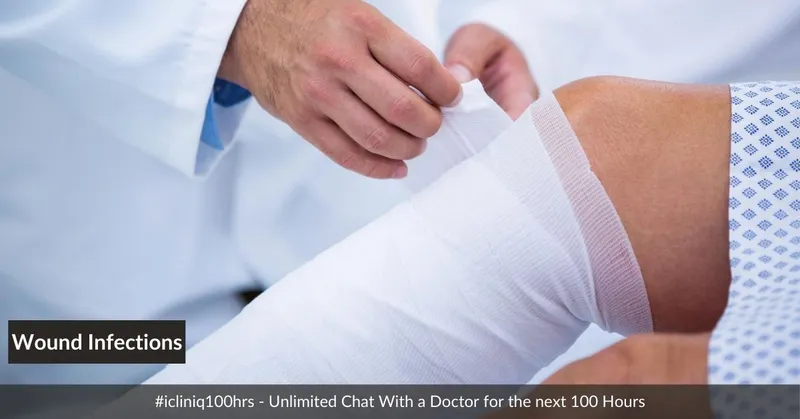
You need diligent wound care to keep the area clean, prevent worsening, and promote healing. Home care nurses can provide wound care for you in the community. If you are mobile, you will need to go to a home care clinic on a regular basis to get wound care. If you are not mobile, a nurse may be able to come to your home to provide wound care. You may also need to see a wound care specialist if your case is complex.

5) Off-loading:

You need to avoid putting too much pressure on your wounds for prolonged periods of time. Wounds located on the feet, buttocks, hips, and back can be difficult to heal because these areas often experience high pressure. You may need a special cushion or mattress to reduce the pressure in these areas. If you are in bed for most of the day, you may need to be turned regularly to off-load specific areas of your body.

6) Treat the Infection:

Infections are usually a complication of a chronic wound, rather than the cause of it. Antibiotics are used to treat infections of wounds and your doctor will decide the best treatment for you. Antibiotics may be given by mouth or through an intravenous catheter. Antibiotics do not cure a wound and do not need to be continued until the wound has fully healed. To heal a wound, the underlying cause must be addressed. Sometimes, surgery may be required to remove infected tissue from a wound.

Listen to related tracks in our music library

Frequently Asked Questions

Wound management involves five basic principles, which involve
- Assessment and exclusion of disease processes. 
- Wound cleansing.
- Timely dressing change.
- Appropriate choice of dressing. 
- Antibiotic prescription.
The most common type of wound infection is caused by bacteria such as staphylococcus, streptococcus, and clostridium. Fungi, such as yeast and mold, including candida and aspergillus, can also cause wound infections.
Some of the following steps can be done to avoid wound infection such as -
- The wound should be maintained dry and clean for the first 24 hours.
- Wash the wound thoroughly with water or soap, depending on the type of wound.
- Antibiotic ointment can be applied to prevent infection.
- The wound should be covered with a bandage or gauze and changed daily or whenever it gets dirty or wet.
- Hands should be washed before or after taking care of the wound.
Chronic wounds are treated with debridement of dead or inflamed tissues and proper wound dressing. The necrotic debris or dead tissue should be properly removed with instruments like a curette or scalpel. Finally, the wound is closed, and medications can be applied to help heal the wound.
Antibiotics can help in restricting or eliminating wound infection, which include -
- Amoxicillin-clavulanate (Augmentin, Augmentin-Duo).
- Cephalexin.
- Doxycycline.
- Trimethoprim-sulfamethoxazole.
- Clindamycin.
The wound area should be cleaned at least twice daily with soap and water or some antibiotic liquid. After that, the new bandage should be placed after applying the ointments. Serious or deep wounds may require stitches or grafts for proper healing.
The wound should not be kept uncovered as the air dries out the wound and causes cell death instead of healing. Covering the wound helps maintain natural moisture that helps keep the cell alive and heal the wound. Moreover, the uncovered wound takes more time to heal and can cause more pain.
Iodine has been considered the best antiseptic ointment for open wounds. Iodine has been regarded as the most effective antiseptic to reduce wound infections. Moreover, it helps in the treatment of wounds also.
Vitamin C plays a vital role in the process of wound healing. Vitamin C deficiency has various effects on wound healing that causes impaired wound healing and causes decreased collagen synthesis.
Vancomycin is considered the most effective antibiotic for treating bacterial infections. It is a drug of last resort, killing bacteria and preventing them from building cell walls. It can be used to treat conditions like meningitis (inflammation of the brain and spinal cord membranes), endocarditis (infection of the inner lining of the heart), and blood and skin infections.
Wound healing can be fastened by taking care of the following things such as -
- The wound should be kept warm to help it faster.
- Dressings should be changed regularly after cleaning the wound.
- Eat more vegetables and take a rest.
- Do not smoke.
- The wound should not be exposed to the open air as it can slow the process of healing.
It is always advised to keep the wound covered every time. Patients can leave it open at night if it is paining or oozing. However, to fasten the wound healing and to avoid any infections, it is advisable to keep it covered until it heals.

Tags:

wound

Ask a Wellness Expert online

Preventive medicine

*guaranteed answer within 4 hours

Disclaimer: Wellness medicine is not aimed to replace the services of your treating physician or allopathy medicines. Our site's information is to those who are willing to take responsibility for their health, being fully aware that the content published herein would not qualify as a prescription or specific medical advice. If users use the information and stop prescribed medication without their physician's consent, they bear full responsibility for their actions, and iCliniq-Wellness bears no responsibility for the same. Information on Wellness medicine should not be misinterpreted as a cure for any illness, as our body is complex and everyone reacts differently.

This website uses cookies to ensure you get the best experience on our website. iCliniq privacy policy