Table of Contents
- 1What Is Geriatric Rheumatoid Arthritis?
- 2What Are the Causes of Geriatric Rheumatoid Arthritis?
- 3What Are the Treatments for Geriatric Rheumatoid Arthritis?
- 4What Are the Potential Complications of Geriatric Rheumatoid Arthritis?
- 5How to Manage Geriatric Rheumatoid Arthritis?
- 6What Is Elderly Onset Rheumatoid Arthritis?
- 7What Are the Elderly Onset Rheumatoid Arthritis Symptoms?
- 8What Is the Elderly Onset Rheumatoid Arthritis Diagnosis?
- 9What Is the Elderly Onset Rheumatoid Arthritis Treatment?
- 10What Is the Elderly Onset Rheumatoid Arthritis Management?
Introduction
Rheumatoid arthritis (RA) is a systemic disease that primarily affects joints, leading to pain, inflammation, and, ultimately, damage to the affected joint. RA is the commonest of autoimmune diseases and is most frequently diagnosed in patients older than 40 years, but it may also be observed in elderly patients and presents challenges with regard to diagnosis and treatment. In the elderly, rheumatoid arthritis (RA) can present differently than the classic description of the disease, and the development of RA past the age of 65 is often referred to as geriatric rheumatoid arthritis.
What Is Elderly Onset Rheumatoid Arthritis?
Elderly onset rheumatoid arthritis refers to the onset of RA in individuals aged 60 or older. The oldest person with rheumatoid arthritis differs from the more typical early-onset RA seen in younger adults, which often begins between the ages of 30 and 50. While the causes of rheumatoid arthritis are not entirely understood, EORA is often linked to genetic factors, environmental triggers, and the aging process. The immune system of individuals with RA mistakenly attacks their own joints, leading to inflammation and damage. In the elderly, the disease can manifest in a more gradual or mild manner, sometimes making it harder to distinguish from other age-related conditions like osteoarthritis.
What Are the Elderly Onset Rheumatoid Arthritis Symptoms?
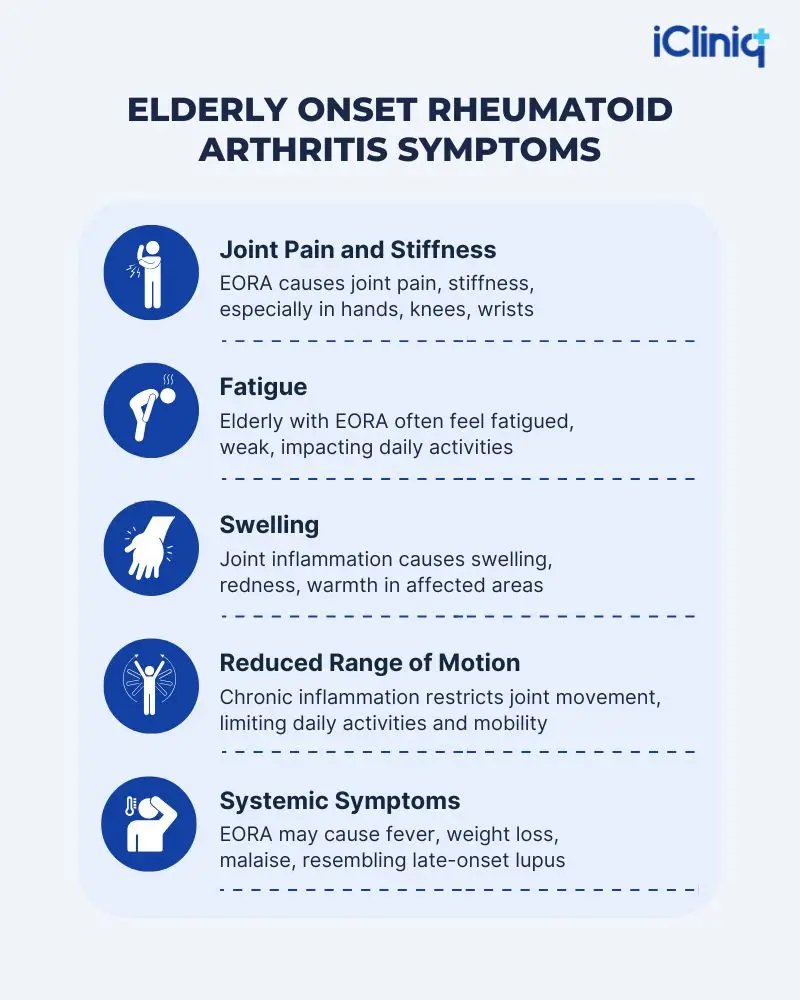
The symptoms of elderly onset rheumatoid arthritis are often similar to those of classic RA but may appear in a milder or more subtle form. Some of the common symptoms include:
-
Joint Pain and Stiffness: The most typical symptoms of EORA are pain and stiffness in the joints, particularly in the hands, knees, and wrists. This discomfort tends to worsen with movement and is often most pronounced in the mornings.
-
Fatigue: Many elderly individuals with EORA report feeling unusually tired or weak, which can affect their daily activities.
-
Swelling: Inflammation in the joints can lead to visible swelling, which may be accompanied by redness and warmth in the affected area.
-
Reduced Range of Motion: As inflammation continues, the joints may lose their ability to move freely, restricting daily movement.
-
Systemic Symptoms: In some cases, EORA can also present with systemic symptoms like fever, weight loss, or malaise, similar to those seen in late-onset lupus.
In elderly patients, symptoms may progress slowly, which can delay diagnosis or lead to misdiagnosis. The variability in symptoms means that some individuals may not experience the classic joint swelling or deformities seen in younger patients with RA. Additionally, the rheumatoid arthritis age factor can make it more challenging to differentiate EORA from other age-related joint conditions.
What Is the Elderly Onset Rheumatoid Arthritis Diagnosis?
Key diagnostic tools include the following:
-
Blood Tests: Blood markers such as rheumatoid factor (RF) and anti-citrullinated protein antibodies (ACPA) are commonly elevated in patients with RA. However, in elderly individuals, these markers may not always be present.
-
Imaging Studies: X-rays and MRI scans can help identify joint damage or inflammation, which are hallmark signs of RA. These studies also help distinguish EORA from other conditions like osteoarthritis.
-
Clinical Criteria: The diagnosis may be supported by the presence of at least four of the following criteria: morning stiffness, arthritis in multiple joints, symmetrical joint involvement, and the presence of rheumatoid nodules.
-
Symptoms of late-onset lupus.
The physician must distinguish EORA from other possible conditions presenting similar symptoms such as late-onset lupus and osteoarthritis during the diagnosis process. Medical professionals need to carry out extensive testing to establish the proper diagnosis between symptoms of late-onset lupus and EORA because their symptoms often share common features. Additionally, understanding the impact of the disease on the patient’s life expectancy with rheumatoid arthritis is crucial, as older individuals may experience different outcomes compared to those diagnosed at a younger age.
What Is the Elderly Onset Rheumatoid Arthritis Treatment?
Common treatments for elderly onset rheumatoid arthritis include:
-
Nonsteroidal Anti-Inflammatory Drugs (NSAIDs): These medications help reduce pain and inflammation. However, they must be used cautiously in elderly patients due to the risk of gastrointestinal or cardiovascular side effects.
-
Disease-Modifying Antirheumatic Drugs (DMARDs): Traditional DMARDs like Methotrexate and Hydroxychloroquine are commonly used in the treatment of EORA. However, these medications may be less effective or harder to tolerate in older individuals. Biological DMARDs, such as TNF inhibitors, may be considered when traditional DMARDs are insufficient.
-
Corticosteroids: Steroid medications can quickly reduce inflammation and pain but are used sparingly due to the risk of long-term side effects, such as osteoporosis.
-
Physical Therapy: Rehabilitation and exercises tailored to the patient’s needs can help maintain joint function and mobility.
It is essential to start treatment as early as possible to prevent irreversible joint damage. Because older adults may have other health conditions, treatment plans must be carefully managed to minimize risks.
What Is the Elderly Onset Rheumatoid Arthritis Management?
Strategies for managing elderly onset rheumatoid arthritis are as follows:
-
Monitoring: The surveillance process tracks disease activity changes, which permits doctors to modify the treatment methods.
-
Modifications in Lifestyle: People with arthritic conditions can help manage their weight through lifestyle changes that combine healthy eating with continuous physical activity. Wild exercising through swimming and walking helps patients develop better strength and mobility.
-
Patient Education: Educating patients about their condition and treatment options empowers them to make informed decisions about their care. This also helps in managing expectations regarding life expectancy with rheumatoid arthritis and quality of life.
-
Multidisciplinary Care: A team-based approach involving rheumatologists, physical therapists, nutritionists, and other healthcare providers ensures that all aspects of the patient's health are addressed.
As the oldest person with rheumatoid arthritis may experience more complex care needs, it is important to tailor management to each individual’s health status, comorbidities, and preferences.
Conclusion
The characteristics of elderly onset rheumatoid arthritis in both patients and medical practice are unique. As with all chronic diseases, value diagnosis and their management are critical in determining the prognosis and quality of life of older patients with the disorder. There is no clear evidence that younger patients will suffer a greater impact from EORA than older patients; while the disease may present in older individuals differently from younger ones, there is a chance that individuals at the other end of the age spectrum will be severely impacted by the disease.
